
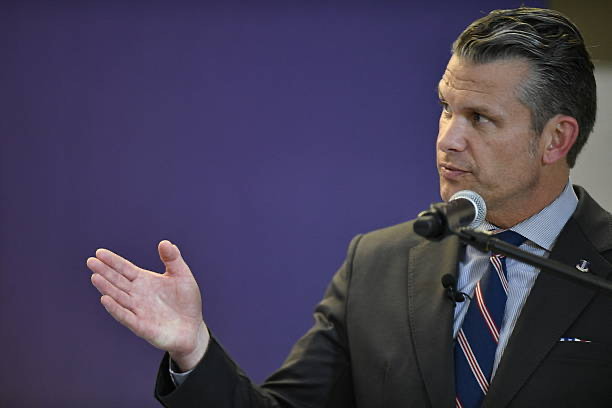
The classified directive is another provocation in the Trump administration’s feud with Ottawa. One U.S. official said it’s sure to be seen as a “slap in the face.”
Hegseth issued the guidance, which has not been previously reported, in a classified memo circulated last week, the officials said, speaking on the condition of anonymity because of the issue’s sensitivity. The new restrictions are sure to be seen as a “slap in the face” to the Canadians, and they raise questions about how the two militaries’ interaction will be curtailed, one official said. The Washington Post has not reviewed the classified
A spokesman for Hegseth, Sean Parnell, said in response to questions that the Pentagon is “taking steps to ensure its engagements with Canada advance tangible U.S. defense objectives and ultimately support a reinvigorated defense relationship.”
The Defense Department, Parnell said, “is prioritizing opportunities for bilateral cooperation that strengthens the defense of our Homelands and shared hemisphere, while supporting Canada’s ability to meet NATO obligations.”
Hegseth’s directive will not affect defense intelligence sharing or how the U.S. and Canadian militaries collaborate through the NATO military alliance, which also includes European allies, and the bilateral North American Aerospace Defense Command, or NORAD, Parnell said. The United States and Canada are founding members of NATO, organized in the aftermath of World War II, and they coordinate daily at NORAD headquarters in Colorado to protect the skies and maritime boundaries of both nations.
Be the first to comment