
Iran vs. Afghanistan: Comparative Status of Women in Sharia
The Islamic way of life and legal system is called Sharia. Sharia encompasses all aspects of life, including worship, food, clothing, business, marriage, divorce, inheritance, crime, and punishment. It claims to provide solutions to contemporary problems based on established rules from the Quran, Sunnah, Hadis, Ijma, and Qisas. However, in modern times, while countries like Saudi Arabia, Afghanistan, and Iran implement Sharia as the country’s primary constitution and criminal law, in countries like India, Pakistan, Egypt, and Indonesia, Sharia is limited to personal law—marriage, divorce, and property. In these same countries, secular national law applies to criminal matters. The Taliban government and organizations in Afghanistan enforce a highly conservative and tribal interpretation of Sharia. In Pakistan, Sharia law is not fully implemented; instead, a hybrid legal system operates. It blends both the secular common law of the British era and Islamic Sharia law. The question is, when Islam has one Kalma, one Quran, one Rasool, one Namaz, Roza, Hajj, and Zakat, why are the interpretations of Sharia law different even within Islamic countries? And if they are different, who is right and who is wrong? And which Sharia system should the world view as correct and Islamic Sharia? In this context, let us examine the Sharia law applicable only in Iran and Afghanistan, and the status and impact on women in both countries.
According to reports prepared by various global human rights organizations, including the United Nations, on the situation of women in Afghanistan during the past five years of Taliban rule, the situation of women there has become extremely deplorable. According to reports, efforts are being made to completely eliminate women from public life in Afghanistan. Afghanistan is the only country in the world where secondary and higher education for girls is officially banned. Girls are completely barred from school beyond grade 6, and women are prohibited from attending university. The Taliban have removed 18 women-related courses from universities and banned approximately 140 books written by women. Due to such strict restrictions, only 7% of women in Afghanistan are now employed. Women are barred from working in non-governmental organizations, government ministries, and the public sector. Beauty parlours have also been completely closed, depriving millions of women of their livelihood. New Taliban Laws and Criminal Code The 90-page new penal code, signed by Taliban Supreme Leader Hibatullah Akhunzada in 2026, reduces women to slaves. Under this new law, a husband is allowed to physically punish his wife or daughter, including beating her, provided the woman suffers no broken bones or deep, open wounds.
In Afghanistan, if a woman wishes to go to court, she must come fully veiled and accompanied by the male guardian, husband, or brother who has abused her. Women have been stripped of the right to divorce, while laws promoting child marriage have been tightened. Women cannot travel long distances or use public transportation without a male relative. Women are also prohibited from speaking loudly in public. Women are completely barred from parks, gyms, entertainment centres, and fairs. Due to the closure of medical education for girls, there is a potential for a severe shortage of female doctors and midwives in the country. In Afghan culture, women cannot seek treatment from male doctors, which is why the shortage of doctors and midwives is expected to increase the maternal mortality rate by more than 50%. This Taliban-controlled environment has led to a surge in depression, loneliness, and suicidal tendencies among Afghan women. More than 70% of women here suffer from “extremely poor” mental health. Human rights activists are constantly protesting the Taliban’s brutal regime on various global platforms, but the plight of Afghan women is worsening day by day due to the reduction of international aid and the Taliban’s intransigence. In reality, In fact, in Afghanistan, Sharia has less influence and the local ‘Pashtun tribal culture’ has more influence.
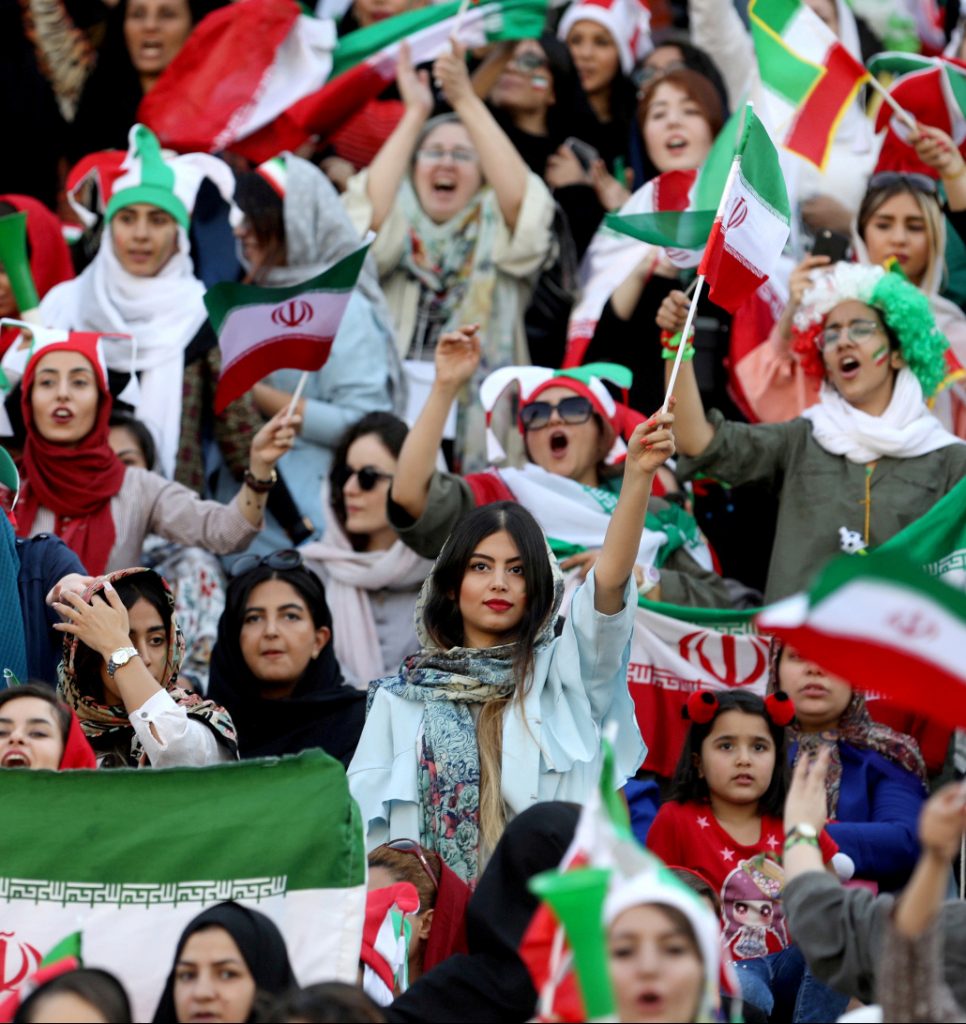
Meanwhile, according to Iran’s Sharia model, the fundamental tenets of Islam, and the Hadis, “It is the duty of every Muslim man and woman to seek knowledge.” Women are fully permitted to pursue higher education, including PhDs and medical degrees. The absence of any restrictions on women’s education in Iran contributes to a female literacy rate of over 85%. Furthermore, 50% to 60% of students in Iranian universities are women, pursuing higher education in fields such as science, engineering, and medicine. Most global Islamic scholars consider this step in Iran to be in accordance with Sharia law. Iran’s Sharia model grants women the freedom to own property, conduct business, and have full control over their earnings. It is noteworthy that Prophet Muhammad’s wife, Hazrat Khadija, was herself a prominent business woman. In Iran, women can become doctors, engineers, teachers, and members of parliament. They can be financially independent, which falls within the scope of Sharia economic rights. Hijab, or modesty, is a part of Sharia law in Iran, but there is controversy over its implementation. Here, the hijab, or covering the hair, is mandatory, and violations are punished by the “morality police.” Human rights experts consider this an overly rigid interpretation of personal freedom and Sharia law. Iran enforces Sharia-based Qisas (tit-for-tat) and Islamic penal laws, but they include a modern legal process, courts, lawyers, and the right to appeal. Meanwhile, in Afghanistan, the Taliban’s justice system is completely informal and tribal, where flogging, stoning, and public executions are common. Women in Afghanistan have little or no legal protection or right to a fair trial. Afghanistan is the only country in the world where girls’ education has been criminalized. However, Iranian women have contributed no less than men to Iran’s ability to compete with a superpower like the United States. Therefore, a realistic and timely interpretation of Sharia is crucial. Imposing a fundamentalist, conservative and tribal culture like that of Afghanistan cannot be called Sharia law at all.
By author
Tanveer Jafri
(About the Author)
Author Tanveer Jafri is a columnist based in India.He is related with hundreds of most popular daily news papers/magazines and news portals in India and abroad. Jafri, Almost writes in the field of communal harmony, world peace, anti communalism, anti terrorism, national integration, national & international politics etc.He is a devoted social activist for world peace, unity, integrity & global brotherhood. Thousands of articles of the author have been published in different newspapers, websites & newsportals throughout the world. He is also a recipient of so many awards in the field of Communal Harmony & other social activities. (Email : tjafri1@gmail.com )
Be the first to comment