
The Gulf War: Who Won and Who Lost?
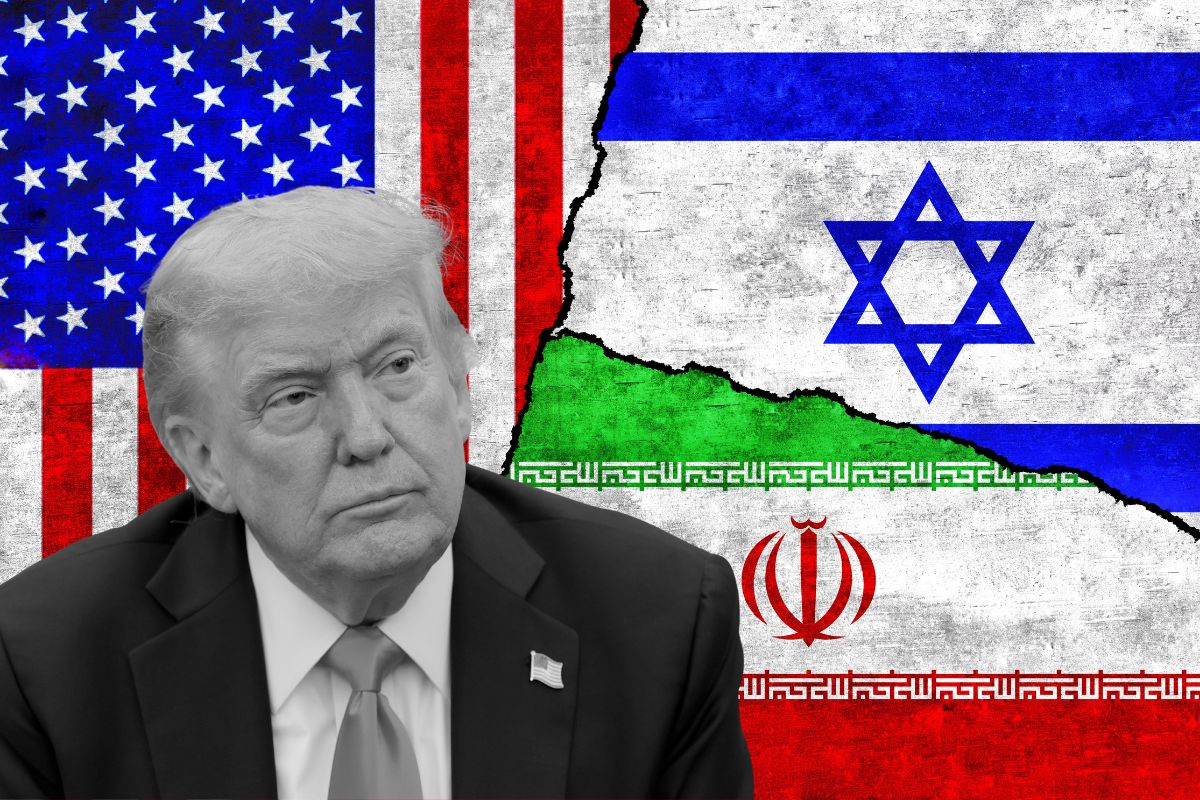
The coercive war imposed upon Iran by the United States and Israel has spiralled out of control and is currently passing through an extremely perilous phase. Having engulfed dozens of nations in its vortex, this conflict has already inflicted financial losses amounting to trillions of dollars. The magnitude of the damage collectively inflicted upon Iran by the U.S. and Israel—damage that continues to mount through incessant attacks on its fuel production facilities—will undoubtedly break the back of a nation that has already endured global economic and trade sanctions for four decades. Yet, despite this, one cannot—under any circumstances—conclude that Iran has lost this war, or that it is destined to lose it. On the contrary, drawing upon its courage, sagacity, competence, unwavering resolve, faith, and diplomatic prowess, Iran has not only unmasked the true faces of numerous nations across the globe but has also shattered the “myth of invincibility”—the false perception of the United States as a “world conqueror”—that had taken root worldwide.
Indeed, U.S. President Donald Trump—whether swayed by the machinations of Israeli Prime Minister Benjamin Netanyahu or falling victim to blackmail regarding the “Epstein files”—underestimated Iran, much as he did Venezuela, and launched a military assault against it. The world witnessed how, prior to invading Iran, the United States and Israel made a devious—albeit failed—attempt to instigate an anti-regime uprising from within the country. It appears that the United States—which is today suffering a humiliating defeat in open warfare—had sought, with the assistance of the Mossad, to resort to fomenting internal rebellion within Iran; a strategy that patriotic Iranians steadfastly refused to allow to succeed. Nor did the American ploy to re impose the Shah’s progeny upon Iran bear fruit. Consequently, it would not be incorrect to assert that, in this cunning gambit, the United States had already suffered defeat at the hands of Iran right at the very outset.
Despite the fact that talks between Iran and the United States were still ongoing in Doha as late as February 27, the U.S.—acting in conjunction with the Israeli military—launched full-scale airstrikes against Tehran on February 28. The objective of these attacks was to effect regime change in Iran and to neutralize the country’s missile capabilities, nuclear facilities, and leadership. During this initial offensive—dubbed Operation Roaring Lion and Operation Epic Fury—Iran’s Supreme Leader, Ayatollah Ali Khamenei, was killed in a strike on his residence located on Pasteur Street in Tehran. In this same assault, approximately 40 Iranian officials were killed, alongside a civilian death toll exceeding 1,444—a figure that included 168 children and 200 women. Among those killed in this attack were Ayatollah Ali Khamenei’s son-in-law and grandson, as well as other top security officials such as Ali Shamkhani. Four senior military officers—including Defence Minister Amir Hatami, Revolutionary Guards Commander Mohammad Pakpour, and Army Chief Abdul Rahim Mousavi—also lost their lives. The attacks impacted 24 of Iran’s provinces, with claims emerging that over 500 military targets—such as air defence systems, missile launchers, naval assets, and nuclear facilities in Natanz, Karaj, and Qom—had been destroyed. In Tehran, the Presidential Palace, the National Security Council, the Ministry of Intelligence, and the Grand Bazaar sustained significant damage, while civilian areas were subjected to intense bombardment. A U.S. Tomahawk missile strike on a girls’ school in Minab resulted in the deaths of 148 students, and several hospitals were damaged. Internet connectivity was severely disrupted by cyber-attacks, and simultaneously, the Strait of Hormuz was blockaded, thereby disrupting global oil supplies. In the immediate aftermath of this offensive, Trump began asserting that “we destroyed Iran’s air force on the ground within the very first hours of the conflict;” adding that “Iran no longer possesses any effective force that could genuinely be termed an ‘air force’.” He has repeatedly claimed that, as a result of U.S. military action, the capabilities of Iran’s Navy and Air Force have been “eliminated” or “almost completely destroyed.” Regarding the Navy, he has asserted that nearly all of Iran’s warships and naval vessels have been sunk; some statements have even cited specific figures, such as “32 vessels sent to the bottom” and “58 naval ships destroyed.”
However, despite these claims by Trump, Iran’s intense missile and drone attack continue unabated. Moreover, the sheer intensity and precision of these attacks have left the entire world—including the United States—in a state of astonishment. While it is true that Iran’s military, naval forces, radar systems, and air defences have undoubtedly sustained heavy damage, Iran has nevertheless demonstrated to the world that the legacy of the 1979 Islamic Revolution extends far beyond merely toppling the U.S. puppet regime of Shah Pahlavi. It has shown that the preparations undertaken over the past 47 years—across social, educational, scientific, and strategic spheres—despite facing global sanctions, are now yielding tangible results. Otherwise, who could have imagined that—despite President Trump’s repeated assertions that he would utterly devastate Iran in every conceivable way—Iran would succeed in wreaking havoc upon Israel’s Port of Haifa, its petroleum facilities, and its financial infrastructure? Who could have foreseen that it would force America’s mighty warship, the USS Abraham Lincoln, to retreat in disarray—leaving it “smoking”—or that a formidable vessel like the USS Gerald R. Ford would be compelled to turn tail and flee? Furthermore, Iran has shattered the myth of Israel’s invincibility—a perception largely bolstered by the efficacy of its “Iron Dome” defence system. Moreover, despite numerous clarifications and alleged “disclosures” issued by Netanyahu, many analysts remain unconvinced and are still not fully assured of his survival.
Nevertheless, inspired by the spirit of the battlefield of Karbala, the IRGC’s 500,000 trained soldiers—along with a reserve force exceeding 2.5 million—have, through their indomitable resolve, completely redefined the very concepts of victory and defeat in warfare. By shattering the notion of American invincibility, Iran has compelled the world to ponder: who, ultimately, has truly emerged victorious in this conflict, and who has suffered defeat? Contact: 9896219228
By Author
Tanveer Jafri
(About the Author)
Author Tanveer Jafri is a columnist based in India.He is related with hundreds of most popular daily news papers/magazines and news portals in India and abroad. Jafri, Almost writes in the field of communal harmony, world peace, anti communalism, anti terrorism, national integration, national & international politics etc.He is a devoted social activist for world peace, unity, integrity & global brotherhood. Thousands of articles of the author have been published in different newspapers, websites & newsportals throughout the world. He is also a recipient of so many awards in the field of Communal Harmony & other social activities. (Email : tjafri1@gmail.com )
Be the first to comment