
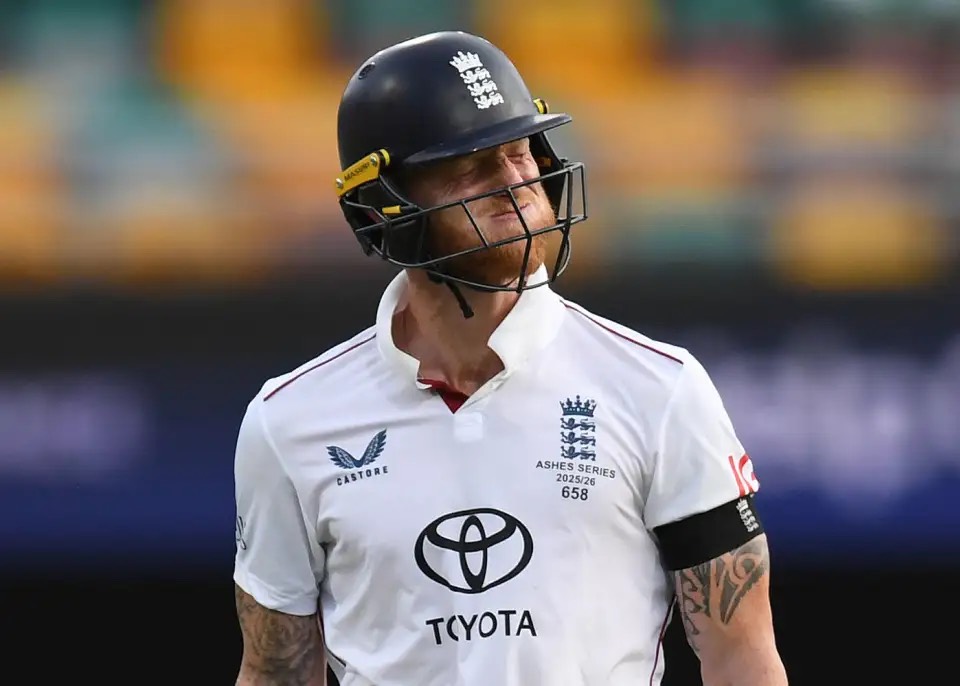
England being two-nil down after two Tests of an Ashes series has few positives, other than a) increasing the likelihood of a stage musical about the series being written if a stirring comeback leads to a historic 3-2 victory; and b) familiarity.
This is the eighth time in the past 10 Ashes tours of Australia that England have lost the first two Tests, and the 12th time in the past 20 Ashes contests in either hemisphere – a sequence that began in 1989 when England attempted to fight fire with selectorial mayhem, making four changes after each of the first four Tests, then treating themselves to six changes for the sixth and final match.
Since the Second World War, England lead the ‘Losing the First Two Tests of an Ashes Series’ competition by an impressive margin of 17 to 2, with Australia’s only experience of what has become the default state of Ashesness for England coming in 2013 and 1978-79 (when almost all of Australia’s first and second-choice players were playing World Series Cricket rather than the Ashes).
While the fading echo of the first day in Perth, the various acts of miraculous fortune-flipping in captain Ben Stokes’ career, Joe Root having finally added his name to an Australian honours board, and the theoretical brilliance of England’s batting line-up offer morsels of optimism if you squint hard enough, Ashes history offers little statistical succour.
In 16 of those 18 previous post-war Ashes rubbers in which a team has trailed 2-0 after two Tests, that side has lost the series by at least three Tests. In 1994-95, England micro-bucked the trend by losing only 3-1.
The glaring exception to the hefty thrashing rule was England in the 2023 series, so England’s entire top six has recent experience of coming close to being the first side without Australia legend Don Bradman in it to fight back from two matches down to win an Ashes series.
Not in Australia’s wildest dreams could they have believed they would be 2-0 up in this Ashes series after playing only six days of cricket.
They were put under the pump by England in the first Test in Perth, then pulled off an incredible turnaround.
It put them on a wave of confidence going into the second Test in Brisbane, where they gave England a lesson in how to play Test cricket, particularly day-night Test cricket.
This series is not dead, but it’s not far from it. If England don’t win the third Test in Adelaide, it will get embarrassing.
I got a close look at England’s style during the 2023 Ashes in the UK. For all of the talk about this tour being their chance to finally win a series in Australia, there was a lot of scepticism in this country about the way England play.
Would England’s batting be suited to Australian conditions? Would they play big shots and find ways to get out? Would they crumble under the pressure of the big moments?
Right now, all of the Australians who were sceptical about England are being proved right.
But I don’t like the idea that pressure or expectation needs to be removed. The great players thrive under pressure, and the best teams hold each other to account.
I played in an Australian team that won a lot, under some tough captains in Allan Border, Mark Taylor, Steve Waugh and Ricky Ponting.
Yes, there were the coaches like Bob Simpson and John Buchanan, but it was the captain and senior players who always ran the dressing room.
Even as a young player, I felt like I was allowed to have my say and opinion. Everyone took ownership of the team.
Then, if someone stepped out of line, they were held accountable by the other players. If someone made a mistake on more than one occasion – which didn’t happen very often – they were told.
We had some huge personalities – none bigger than the great Shane Warne – but we all felt that what we were doing was for the team and for each other. Matthew Hayden used to say we pulled together because of the love we had for each other, such was the amount of time we had as a group.
That accountability, responsibility and adaptability all came together when we stepped on to the field as a team.
Admittedly, all of these things are easier when a team is winning, which England are not doing right now.
My concern for England was the message of “this is the way we play” yielded a culture that lacks accountability.
It was almost that England had decided conditions had to adapt to them, rather than England adapting their game to suit the conditions.
Finally, in the aftermath of the defeat in Brisbane, it looks like the penny has dropped.
Both Ben Stokes and Brendon McCullum conceded there are issues, and they need to do something about it.
I have no problems with what the England leaders said in public at the Gabba. If Stokes and McCullum have been strong in the media, you can guarantee they have been even stronger behind closed doors.
Will we now see a new version of Bazball? Like I said, I like the element of playing without fear. If England can add the ingredients of pressure and accountability, then they might still be on to something.
For all that England have been criticised, Australia deserve a huge amount of credit.
If England had been told they would play an Australia team without all of Pat Cummins, Josh Hazlewood and Nathan Lyon, they would have been rubbing their hands with glee.
And yet, Australia pulled off victory in Brisbane with all of their other players standing up.
Mitchell Starc has been absolutely outstanding, supported by Michael Neser, Scott Boland and Brendan Doggett.
Alex Carey put in an absolute masterclass behind the stumps, possibly the best wicketkeeping performance I’ve ever seen – and I played with Ian Healy and Adam Gilchrist.
Perhaps the biggest revelation for Australia has been the shift in the batting order.
Before the series, when there seemed to be a lot of discussion about the Australia line-up, I said there was only really a debate about one area – Usman Khawaja’s opening partner.
That debate has been settled, just not in a way anyone expected.
Ever since Travis Head stuck his hand up to open when Khawaja got hurt in Perth, Australia have looked like a different team. Now, there seems to be the opportunity for Head and Jake Weatherald to cement themselves as the opening pair.
Khawaja might find it tough to get back in, although Australia coach Andrew McDonald has suggested he could bat at number five.
Injuries will mean England’s Mark Wood and Australia’s Josh Hazlewood will miss the third Test in Adelaide and the rest of the series.
That is a great shame for both men. I know how much hard work it is to bowl fast, the effort that goes into coming back from injuries, and how desperate both would have been to play a full part in this series. They will be devastated.
Adelaide will be a good pitch, with something in it for batters and bowlers. Australia will certainly recall Lyon and it looks like Cummins will be back to lead.
Australia will remember how England came from 2-0 down to draw the last Ashes. They will know England are dangerous.
On this occasion, they have England by the throat and must not let up just because some big names are returning. They cannot get complacent.
An Australia team should always think it can win every Test it plays, so for that reason this team should be thinking about winning 5-0.
England will know they have no choice but to turn things around in Adelaide. If they don’t, then it really could be 5-0.
Be the first to comment